
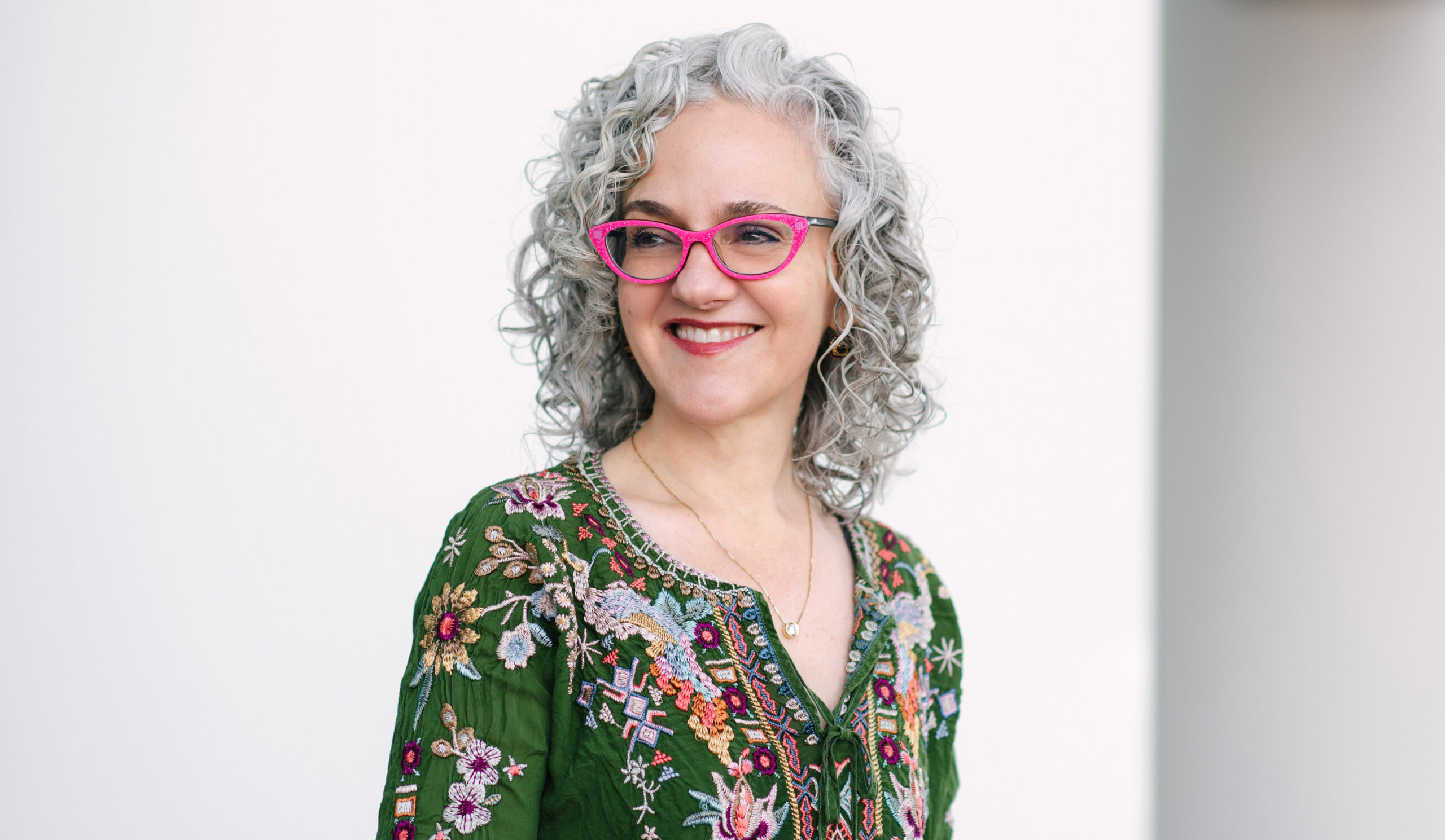
Lisa Marchiano is an author, podcast host, and Jungian analyst. She is the author of three books published by Sounds True, "Motherhood: Facing and Finding Yourself", "The Vital Spark: Reclaim Your Outlaw Energies" and "Find Your Feminine Fire and Dream Wise: Unlocking the Meaning of Your Dreams". She is the cocreator and cohost of the popular depth psychology podcast This Jungian Life, and has a private practice in Philadelphia.
555: Mom's Anger Through a Jungian Lens
Lisa Marchiano
In this episode of the Mindful Mama Podcast, Hunter Clarke-Fields talks with Lisa Marchiano about the emotional transformation of motherhood. They explore matrescence, identity shifts, and the importance of embracing the shadow self. The conversation touches on rupture and repair in parent-child relationships, the power of anger, and setting compassionate boundaries. Lisa also shares practical mindfulness tools to help mothers ground themselves and reconnect with their inner authority.
Ep 555- Marchiano
Read the Transcript 🡮
*This is an auto-generated transcript*
Lisa Marchiano (00:00)
The mom couldn't allow it in her cell, so there was no way for the little girl to relate to her own anger and aggression, which are actually important for us to have a relationship with.
Hunter (00:15)
you are listening to the Mindful Mama podcast, episode number 555. Today we're talking about mom's anger through a Jungian lens with Lisa Marciano.
Welcome to the Mindful Mama Podcast. Here it's about becoming a less irritable, more joyful parent. At Mindful Mama, we know that you cannot give what you do not have. And when you have calm and peace within, then you can give it to your children. I'm your host, Hunter Clarke-Fields. I help smart, thoughtful parents stay calm so they can have strong, connected relationships with their children. I've been practicing mindfulness for over 25 years. I'm the creator of the Mindful Parenting Course and Teacher Training. I'm the author of the international bestseller, “Raising Good Humans”, “Raising Good Humans Every Day”, and the “Raising Good Humans Guided Journal”.
My gosh, I am so excited for you to hear this conversation. I had such a great time. And if you're interested in seeing it, we actually recorded it live in my living room. So you can go to the YouTube channel and see it. But I'm going to talk to Lisa Marciano, an author, podcast host, and a Jungian analyst. She's the author of three books, “Motherhood: Facing and Finding Yourself”, “The Vital Spark: Reclaim Your Outlaw Energies”, and “Find Your Feminine Fire and Dream Wise: Unlocking the Meaning of Your Dreams”. She's also the co-creator and co-host of the popular psychology podcast, This Jungian Life and has a private practice in Philadelphia, which is why she could come down and hang with me in Delaware. So cool. So we're going to talk about a bunch of great stuff about motherhood, about anger, about rupture of her hair, so much in there. Join me at the table as I talk to Lisa Marciano.
Lisa, thank you so much for coming on the Mindful Mama podcast. Sure, so glad you're here. This is such a cool special episode out here. In person, everyone, this is my living room. This is where I watch- Bill and I are into “Love on the Spectrum”, which is the sweetest, most beautiful show. But that's not where we're here to show. Motherhood can be really hard at times and you wrote book about motherhood as well as other books. How can we see these hard moments as part of our personal growth rather than just trying to push them away and fix them?
Lisa Marciano:
Well, I always, I'm going to back up a little bit. I was younger, when I was in my twenties, I was like, I don't want kids. I felt like I really wanted to have a career. I wanted to do something that mattered. I wanted to do something that was really important. And I really kind of thought, well, I mean, I don't know, just having kids, why would you do that? And I was definitely one of those people who I remember this and I was at a party once in Washington DC in my early 20s and I started talking to this woman and I said, what do you do? And she said, I'm a mom. And I actually like left and like went and got a drink and found someone else to talk to. So I was really like, this is not interesting. This isn't about, I really thought that it would keep me from growing. It would fail my-
Hunter (04:21)
Yeah. Pulls you back.
Lisa Marchiano:
It would hold me back. It would keep me from becoming the person that I needed to be. So obviously I changed my mind eventually. I was young and stupid. And then I had my daughter and then I had my son. And so my daughter was two, my son was just born, know, so he was a baby. And I was in analytic training.
Hunter:
Can I ask how you changed your mind? Because I thought, “I'll have some kids sometime. Like when I'm 35, I'll start to think about it” was kind of how I thought about that. And then when I was like 28, actually it was kind of was here in this room. We had a friend come over and she was pregnant with twins. And she was hugely pregnant. And I had this experience of like touching her belly and being like, my God, I must. do this, like it was like this. went. Wait upon me. And then I was like, we must have baby.
Lisa Marchiano:
I like that you know, yeah I love it. Mine wasn't quite like that. And it's a bit of a long story, but I'll try to give you the short version and then loop back to your original question. So part of what I did in my 20s is I was working for international nonprofits like refugee and relief agencies. And I had done some of that work in DC and I was really in love with it. I thought this is my calling. And then I went and I worked for a refugee organization in Bosnia. And this was during the 90s. And part of what happened to me when I was in, well, I mean, this is sort of the short version in a way, but like what happened to me right before I went to Bosnia and then while I was there, I just kind of realized that it's almost like I realized that the interesting stuff wasn't so much out there as it was in here. And that's one way of putting it. I just, and I also, you know, I got a little cynical about the work we were doing in Bosnia because so much of it was kind of like, I wasn't sure it was really making a difference in people's lives. And I think I just got so much more interested in the inner world and my inner world and the inner world of other people. And then I came back and I went to social work school to become a therapist. the day I remember is I was riding the bus in Brooklyn and there was a mom behind me talking to her little toddler. And it kind of reminded me of the way my mom talked to me. And I was like, my God, I think I want to do that. Yeah. So it was a little bit of a slower inner journey. Yeah. And seeing the value of that inner. That's right. Connectiveness and that. Well, I was inflated. Right? In my 20s. I'm like, I'm going to go save the world. You know, that's what we call an insulation, you know? And it's like, well, maybe what really matters and is really valuable is right here.
Hunter:
Yeah, I think that's a profound shift to go from view to be really, really looking outward to look really, really then looking inward and then really looking inward: Jungian.
Lisa Marchiano:
Yes. Yes. And babies. So there I was training to be a union analyst. I was already a therapist. I was in training to become a union and I had this little toddler and this little baby and it was like one of those days my kids used to wake up at like five every morning. You know, that was like on a good day and you're so, yeah, it so hard. And so there I am. It's like eight o'clock in the morning. It's already been a long day. Like nothing's open for hours. It's not like we go to the library. Should have the little kids go to school at like 7 a.m. Not the high schoolers, because they've been awake for hours. Totally. So I'm like, well, let's go for a walk. Now it's bitter cold out, but I was like, all right, we'll go for a walk. So I'm pushing the double stroller. The sidewalks are terrible. I'm sort of pushing the stroller uphill, getting caught on tree roots. It's freezing cold. One of the kids is crying. And I'm like, and I just had this thought. I thought everything about this is so hard- someone's whining. And then the next thought came in, it was just this really clear like, you know, voice that said, yes, but I'm growing so much as a result. And I kind of went, my God, because of course that's true, right? mean, there's no, you know, there used to, when I was a kid, there used to be this advertisement for the P score and it was such a great line. The line was the toughest job you'll ever love, which is a, it's a brilliant line. And I think it's so true, like anything that's really gonna change us and engage us and be meaningful is going to be difficult. I just sort of got that, that instead of like motherhood being the thing that was gonna hold me back and keep me from kind of realizing myself or actualizing my potential, that it was actually the thing that was going to make me into the person that I needed to become. And that thought just, I thought was riveting. And I was like, well, I want to read, mean, somebody's written that book, you know, somebody's written about this, right? I can't be the first person to think this.
So I was especially interested in reading about it from a Jungian perspective, because of course, like I said, I was in training. One of Jung's main ideas is this thing that he called individuation, which he used differently than it's sometimes used. For Jung, individuation was this process of becoming whole, of growing into the person that we were meant to be. the goal is wholeness, not perfection. So it's about developing as many parts of yourself as possible and really getting to know yourself as fully as possible. So, you know, that day with the stroller, I was like, yeah. I'm this is an individuation process. No, that's I really wanted to see you know what which Jungian had written about motherhood as an individuation process that when the kids went out for a nap later, I got online and I'm googling around and no one had written that book.
Hunter:
And you're like, aha.
Lisa Marchiano:
Well, I did think right then that that's what I wanted to write my thesis about in analytic training. And then when I was writing my thesis, I was like, this is going to be a book.
Hunter (11:05)
That's amazing. Next time I see a mom with a stroller, I'm going to wonder, she considering the process of her individuation right now and the fact that this challenging moment is changing her and shaping her in an amazing way. Have you heard the word, matressence? Yeah, I love that. I had a podcast guest talking about that and the idea that it's like adolescence, you know, extended time period of growth and it's, you're not bouncing back, you're changing into something new. and I love that. Yeah. And it just kind of honors the depth of it, you know, that it's like something that is that life altering that it changes you just like the change from a child to an adult is that profound change as well.
Lisa Marchiano (11:59)
It certainly is.
Hunter (12:06)
Stay tuned for more Mindful Mama podcasts right after this break.
And my anger that was coming out and my frustration with that. so, you know, I've learned an enormous amount about emotional regulation. We talk about that a lot here on the mindful mama podcast. And I was thinking about that in relation to the Jungian concept of the shadow. And I was wondering if you could help us understand how that concept of the shadow can help us understand those moments when we're losing it with our kids.
Lisa Marchiano:
Yeah. Well, the central three chapters of my book are all about shadow and parenting. And that is actually kind of where I started when I began thinking about it because, you know, I was, well, one of the epigraphs where the chapters is this really great quote that just says so much is this, novelist, Fay Weldon said, the best thing about not having kids is that you can go on believing that you're a good person.
Hunter:
Yes, I love that. That's great. Yeah, and I was like, wow. I mean, I was shocked at the degree of like rage that I could feel toward these little people whom I adored. And they're so stinking cute when you're, when at least for me, when that temper started coming out, like when Maggie was like 18 months and two years old and you look back at those pictures and you see how incredibly adorable a child that ages and you're like, this is when my anger's coming out. And it's not talked about a lot.
Lisa Marchiano:
No, well, right. And I mean, I was having women come in to my practice and talking about like the incredible guilt that they felt about being angry. And I got it because it was, you know, stunning to me and it, you know, I felt guilty too, but I was also curious about it because I got that it must be, you know, such an entirely normal part of parenting. And then of course, like I remember going on some like parenting discussion group at that time and it was the magazine called, what's that, was it Motherhood? There used to be a magazine, Mothering, it was Mothering. So they had discussion forums and I went on their discussion forum and I typed in rage and I got like hundreds of thousands of hits. And I was like, this is not just me, you know? And so I got really curious about it and I did write about maternal rage in my book, “Motherhood”.
And you're absolutely right, it really connects with this piece of the shadow because we're not supposed to feel that way. We're not supposed to be that person. It's almost this kind of archetypal level of, it's like Kali, the dark goddess, just takes over and you just feel sometimes actually murderous. And that's why parents joke about her all the time. The kind of jokes that we make are pretty dark. But there's this little, I used to say, I'm either just totally loving them up and enjoying every second of it or wanting to bury them in the backyard. And because I think it does evoke that depth and it's-
Hunter:
But it's like the opposite of how we conceive of brotherhood, know, the opposite of the, you know, we conceive of this nurturing, soft, welcoming, like accepting, like that's what I aspired to be, right? And I had specifically chosen not to exhibit the temper that my father exhibited, you know, that was like a conscious choice. And yet there it was. It was so frustrating. It was the shadow. I remember thinking like, okay, this is this challenge is going to be my teacher?
Lisa Marchiano (17:54)
So part of the idea of shadow is that we all have one. It's all the things we don't want to be. And that it's better to become conscious of the shadow rather than just pushing it away. It's better to have a relationship with it because otherwise it kind of runs things from behind the curtain. you know, and there's like value in getting to know your darker parts. It gives you authority. You know, you're more solid. And so I was like, okay, I remember trying, know, before I had kids sort of thinking like, okay, nothing that is human is alien to me, right? And this notion of like sadism, like taking pleasure in someone else's suffering. I was like, I can't see that in myself. I've never taken pleasure in someone else's suffering. And then I remember, you know, my daughter, when she was a toddler, she used to hate to have a bath and one day I just got so frustrated, like the water was too hot or it was too cold or there was soap in her eyes. It was just so frustrating. And at one point I took a pail of water that was a little bit too cool and dumped it over her head and she wailed and I liked it. And I was like, oh, there's my sail. Right? Yeah. And I, you know, so was like, oh, okay, this is very humbling. Like I'm not proud to admit that, you know. Also, hello Shadow!
But I think it's human and I think it's like, okay, well, now I know something about myself I didn't know before. And I think in some sense, like what's the purpose of life? In some sense, you can make an argument that it's to know yourself as fully as possible. And if that's true, there's nothing like parenting to help you get to know yourself, both your good parts and your bad parts- especially the bad parts.
Hunter:
You know, it's interesting that, you know, when you, when you dump the pail of water, and you saw that, that shadow, you know, I imagine it was like, you know, it was like, hello, here's this shadow here. I imagine for your daughter, she's like, what's going on, mom? Right. Right. There was probably some repair that happened kind of after that.
Lisa Marchiano:
And that process of kind of knowing that this is of me as well as, you know, of other people, what I see it as, I guess this value I see it as is like, well, you can, when you know, have, hello, anger, I've got this temper and we have gotten this anger. I've got this, you know, sometimes I have this desire to, you know, to see people frustrated or whatever these shadow things are that we have, we can see them coming and then we can maybe process them in another way. But I also think it gives us a lot of compassion for others. And I also think it makes us more, it helps us be a little more accepting of our kids. Sometimes we talk about it in my family: we joke that everybody is like at least 3 % evil or 5 % evil like we just joke about it. And then when somebody does some evil little nidgey thing, we're like, oh, there's, there it is. So, and so it was 3 % evil, but I think it's so helpful to think about that rather than, and to just accept that, you know, the process of accepting it makes it so that when we are inevitably human and we inevitably have darker thoughts or feelings or those difficult emotions, the anger, the rage, whatever it is, where it's like, I see you, it's there. It's not like there's a shame. When you can accept that this is part of you, that then it's like, you just bounce back. It's not like you need to punish yourself for having everything in you. You know, it's not, I don't know.
And I think, you know, so I came at it, I mean, obviously it was really distressing to me that I was having those experiences, but I also, you know, I guess through my training as an analyst, I also was curious about it. So I came out, I was curious about my clients anger at their kids. I was curious about my anger at my kids. I'm like, what is this? What is this about? Let's move in, let's get closer. Let's find out more about it. you know, and I do think that it kind of invites self-compassion to be curious. It's like, well, okay, I yelled at my kid. I'm sorry I did that, but let me get curious about it maybe I can have some compassion. And I think that you're saying, like in some ways modeling that kind of shows our kids that anger is something that can be survived.
And of course there is this rhythm of rupture and repair. So you get angry and then you repair it hopefully. I was always really good at that. And, you know, I'm a good apologizer, you know, just, hey, mommy spoke to you in a way that I wish I hadn't and I'm really sorry. And so, you know, hopefully it makes anger a little bit less scary for them because anger is important. You know, there are these kind of benefits of anger. One of the, you know, I have some stories in the book about that and one of the things that happened to me when I was, when my kids were little was I I knew this mom who had, she came from a kind of abusive situation and she had promised herself she would never get angry at her daughter. And it was, and she didn't, you she would like nearly explode, but she would leave the room. She never yelled. And it was a very odd thing spending time with this mom and her little girl because one time I went over to their house and the mom went upstairs to get something and this little girl, like I watched her, she just pushed my daughter for no reason. And I, and I said, Hey, we don't push or something like that. And the mom came down and she said, you know, she doesn't push. And I was like, well, she just did. But it was my, my kind of analysis of that later was it's like the mom couldn't allow it in herself. So there was no way for the little girl to relate to her own anger and aggression, which are actually important for us to have a relationship with, which is that's kind of the thesis of my second book, the bio spark, you know, but, but like, yeah, it's problematic and it can be destructive, but you don't, you don't want to, you don't want to am amputate it. Like, like you need to figure out how to have your teeth and your claws in life. And what better way to do that than to have it, to be in relationship with it and have your mom in relationship with it and managing it hopefully, but also sometimes you don't manage it perfectly. Anger's messy.
Hunter (25:21)
Yeah, it's not always going to be wrapped up in a perfect rupture repair bow. Right. It's going to be, yeah, the middle path of like, messy. It's nature. know, never, you know, the extremes are so clear and I think enticing because there's clarity in them. But in the middle where the wisdom is, is like, is very, very messy. Yeah. There's a saying that this all reminds me of, which is to walk with your shadow in front of you. And I love that idea of like walk with your shadow in front of you. When it's behind you, it's like chasing you, it's big, it's scary. It's something you don't wanna look at. And when it's in front of you, you're there in relation to it. It's not something, and you call these outlaw energies in that second book, “The Vital Spark”. I mean, what does it look like if we're thinking about practical practices maybe or looking at things? I I have this beautiful dream journal. This is part of it for a mother or a parent to reconnect with that inner fire without the guilt.
Lisa Marchiano:
Yeah, mean, in some ways those two books- I mean, “The Vital Spark” is not written for mothers, but there's some overlap in content. And I think in some way they really follow on each other because one of the things that motherhood taught me was, you know, gee, Lisa, here's your anger. Look at how big it can be. Can you make friends with it in any way? Can you get curious about it? Can it maybe be good sometimes? And you know, mean, honestly, that kind of like, that fierceness is really required when we're mothers because we're gonna wanna mobilize that ferocity at times to protect our kids. So it's good that it's there, you know? You just wanna be able to figure out how to channel it. And then the second book, you know, there's something about being able to sit with your darkness that helps you really claim your authority. And so those two, you know, there's two overlaps between the books. One is anger and the other is authority. And so both books have chapters on anger and authority. And the vital spark is, is, is basically it's a book about reclaiming shadow. So the, the Jungian idea of shadow, and it was a term that he coined is that we all, we all had a shadow. We learn in the process of development. what is valued and okay in our culture, in our family, what traits are acceptable or valued. And we learn what parts of us are not okay. And I mean, there's obvious things like, you know, hitting your little sister over the head with a toy. It's like, that's not okay. But also families have their own cultures. And so a lot of times there's something that you're absolutely not allowed to be in your family of origin. It's a little more subtle. Like maybe you were not supposed to be lazy. Like sitting around and reading a book was not okay. In my family, it was not okay to be like, kind of like drawing attention to yourself. you were supposed to be very humble and kind of, you know, melt into the background. But probably every family has something like that. You're supposed to be high achieving or you're supposed to be athletic. going along with that is there's something that's in the shadow. So most of us have a whole bunch of stuff that's in the shadow. I also think that women, honestly by dent of probably both nature and nurture, have certain qualities that we don't feel comfortable claiming and developing.
Now, I know plenty of women who are really good with anger, who are really good with assertiveness, but as sort of on a population level, we're more agreeable, we're more likely, for example, to tell someone a white lie than an uncomfortable truth. These kinds of things are just, we know that this is just true. So something like being really bold, being kind unapologetically angry, being really assertive, being ruthless is one of the chapters in the book. These are things being disagreeable. These are qualities that for most women are like, no, I can't be that. I can't be that. I had a friend call me up the other day who was having a kind of fairly minor conflict with someone in her life. And I know this person too. it was like this third person who she was having a conflict with, this is really lovely person. And she was like, I need to tell her something, but I just can't, I just can't, I don't wanna ruffle feathers. And I'm like, it's okay, it's okay to approach this person and say, there's something that I need to talk about.
Most of us just feel like this is gonna be world shattering to confront someone, to make someone else uncomfortable. Again, not all women are like this. I actually tend to have a lot of like female friends who are very disagreeable. I think I really like disagreeable women. I'm not one of them by nature. I worked on it. But so, and I have these disagreeable friends who would not have any trouble at all doing this. But for most of us, it's like, no, no, I can't do that. But when we don't allow ourselves to develop those skills, we're really cutting off a source of vitality, a source of strength, qualities that can make a huge difference in terms of being able to stay connected with ourselves. Like those other qualities of like nurturing and kindness and attunement are beautiful, wonderful qualities that really help us get and stay connected to others, which is a very important thing in life. But to get and stay connected to ourselves, sometimes we need to make other people unhappy. And for some of us, that's a hard thing to do.
Hunter:
I can see that's a hard thing to do. And a lot of parents I'd talk to and a lot of moms I'd talk to, you know, I do when I'm coaching parents and moms, one of those things I teach is a funny little mantra that we talk about in mindful fending this idea of like, not my problem is something I teach them to say silently to themselves. And this idea that it can be really awkward and uncomfortable, but also really freeing to say, not my problem to a lot of the problems your kids have. But I also think it's so, so helpful for you to just be grounded, you know, your own person, your own person with your own needs and wants. And also if they're having a big problem, it doesn't have to throw you off kilter, it doesn't have to upset you. It doesn't have to upset your world and make things a problem in your world. When your kid has a problem, you know, maybe held a boundary and they now they have a problem. They have a problem and it's okay for them to have a problem. It's not my problem. And it's interesting to see people work with that and wrestle with it. And for me, I guess maybe I have plenty of disagreeable- I don't know, you know, I was always, I think I was really encouraged to be very individualistic and creative and all that stuff. And so it's okay for me, but it's really been interesting for me to like work with other women and moms and to help them, you know, claim this idea of like, I don't, I'm here for you. Like I'm here for you, but I don't have to solve your problem.
Stay tuned for more Mindful Mama podcasts right after this break.
Lisa Marchiano (36:03.692)
You know, going back to this idea about shadow and what we expect of being mothers, we, we really, it's easy to get into this thing where you think that like a good mother will do anything for her kid, you know? And I mean, I, you know, learn the hard way that like, no, that's actually not what a good mother does. A good mother does what you're describing, you know, to a point you set a boundary and you know, it's you let your kid have a problem and you don't do it. There are things you don't do for your kids, because it doesn't help you and it doesn't help the kid, but that orientation towards the other, like I'm gonna be attuned to you, I'm gonna be attuned to your needs. And then things get blurred
So I'll tell a sort of long story. When my daughter was a few months old, a friend from out of town was close by and I wanted to go see her. It was the first time that I had driven on the turnpike with my daughter. And I was like, all right, I'm going to do it. She was maybe like a couple of months old. I'm going to do it. And I'm like, okay, I just have to remember the most important thing is to be safe. If she's crying, that's okay. She's okay. Like she's, she's in the car seat. She's with me. She may be unhappy, but my focus is to drive. So, the drive fine there was fine. The drive home, she was fussy and she started crying. And I was like, “Lisa, it’s okay, she's okay. Just focus on driving”. And I was so proud of myself because I was like, I'm just driving, I'm just driving. And then I looked down and I realized that I was doing 95 miles. And like my brain was like, I'm fine, I'm fine, I'm But my whole nervous system was activated to the point where my foot was doing something totally different. And it took me a while to realize that like, that is a thing, right? Your baby's cry just gets your whole nervous system activated. And it's almost like you can't really control it, but there it is. And I remember when they were much older, just so happened, I think they were like in high school and junior high or something like that. They were both gone for the weekend. They were doing different school things. And I felt so relaxed. And I thought, wow, like, what is this? And I realized that when they were around, I was constantly listening for like, who's going to start fighting, who's going to come home and be unhappy. When am I going to hear a door slam? you know, and I thought back to that moment in the car, like I just, my nervous system is like so keyed into theirs that it was very difficult just to sort of relax.
Okay. So fast forward another bunch of years. My son was a freshman in college. He was having a struggle, I knew he was having a struggle. I was so anxious that I wanted to like jump on a plane and fly to where he going to college and like sit him down and tell him everything he needed to do. Of course I didn't do that. I didn't even think seriously about it, but that was my impulse. And I thought about that and I thought like actually what I wanted, like I did of course want him to be okay, but I wanted him to figure it out so I would stop worrying that it was about- I wanted him to be okay so I wouldn't have to worry, right? And it's not his responsibility to keep me from worrying, that's actually mine. So in my distress, I actually did a dream incubation, is usually kind of my go-to thing when I'm struggling with something. And a lot of times when I do a dream incubation, which that's where you ask your dream maker a question before you go to sleep. And a lot of times I wake up with a dream, but occasionally I just wake up knowing something.
And this was one of those times I woke up and I thought, Lisa, you have no idea what he's doing to fix the problem. And it was like, it was like someone had thrown a bucket of cold water on me. was like, well, of course. mean, he's this great kid. He's very, he's got a lot of strengths. Like something was going a little off the rails. Why would I think that he wouldn't be dealing with it? And of course he was. And like a week later, he fixed the problem with no help from me. I wouldn't have been able to fix it anyway. it was, and that's what he needed. And again, it was like this, yeah, the fact that I was having a reaction to watching him struggle, that actually wasn't my problem. And my anxiety wasn't his problem. It was a tough, tough lesson to internalize. And it does help to get out of what he needed- kind of giver mode, the sort of the caregiver position where we're just focused on the other person's needs. Obviously that's the right place to be when you have an infant. But it changes pretty quickly in families. know, still your needs are always as important as your kids needs in some ways, just an infant's needs are so much more urgent. You know, but it's not like you can push your needs off forever, right? You can push them off for a little while. Right. But you can't forever. You have needs as a human as they get older and they come back.
Hunter (41:40)
That's interesting, because that's like when a kid is really upset, right? And we want to be like, you stop crying, so I feel better. You stop having a problem, so I feel better. And that's not their job to regulate their emotions so we can regulate ours. You know, it's interesting: we affect each other.But yeah, that whole responsibility. Well, before we wrap up, I wanted to talk about the idea of, you know, in your podcast, which I love, This Youngie in Life, you explore the idea of archetypes. And I was wondering how might recognizing archetypes that were unconsciously acting out like the martyr or the rescuer, kind of to go back to what we were talking about, help us show up more consciously in our relationships with our kids?
Lisa Marchiano:
Well, so Jung's idea of the archetypes is that there are these kinds of primordial universal energies that are always there. We're sort of born with them. you want to think about it, think it's a way it's another way of thinking about an instinct. And then we're just kind of born with a potential, I would say. And this winds up leading to different cultures will create images of archetypes. And so, for example, every culture has a kind of maternal goddess, whether it's the Virgin Mary in a kind of Christian culture or, you know, the the Venus of Willendorf or- on that note, you ever been to, I mean, maybe I'd probably never been to Abu Dhabi, but I got to go to a parenting conference there. The Louvre Abu Dhabi is amazing in that it organizes all the artwork from different times around the archetypes. my gosh, I knew that you were stopping. All the like motherhood figures together from different cultures. It's so simple. I have goose bumps telling you about this because it was so profound to experience them all together by way of archetype.
Hunter:
No, I do. No, I believe at least by the book. But yes, that's exactly it. I mean, you can look at every culture and there's some kind of version of that, that kind of mother goddess. So the mother is one of the big archetypes, the mother has every archetype has two poles. There's the positive pole and the negative pole. So the negative mother looks like someone who's smothering or devouring. So you look at like, the goddess Kali that I mentioned before, there are other dark mother goddesses. And I think that when we were talking about rage before, and I said it's an archetypal experience, it can be like when we first have that baby and we bring that baby home, we can really feel like we're embodying that positive mother archetype. It's almost- you feel something almost a little more than human. I remember talking to one woman who had a really profound birth experience and she really just felt like she was inhabiting the goddess while she was in the throes of it. I certainly felt that way. mean, nursing was just so wonderful and you're just holding this beautiful baby and you're nursing and all that good oxytocin is going and it feels something a little more than just an individual human experience. It really feels archetypal. Well, we are just swept away in a rage, that's archetypal too. And, I think that's how I understand it. And, know, then, then the negative pole has been constellated and it's brightening. but, but it's, you know, I mean, the point is you certainly don't want to get, identified with an archetype because there it's a bigger energy than human, but certainly the archetypes get constellated in our life at times.
Lisa Marchiano (45:59)
I think it's important to have a way to kind of come back and re-enter just ordinary human form and remember that that's something that we touch upon at times, but that's certainly not where we want to live. It's interesting, I guess, if you understand it as this archetype, it's like this other, It's like mindfulness, right? It's like taking our thoughts and our feelings and kind of looking at them rather than being sort of subsumed by them. And that's the same idea of like taking these things and seeing them as an archetype in the moment, it's very difficult to do that because they're so powerful. But yes, later to reflect, it's like, whoa, what was that that took me over there? You know, it's like, okay, it's good to be back with my feet on the ground, you know. In wrapping up for parents and moms who are listening, do you have any practices and anchors to kind of bring us back to feeling grounded, to feeling present for motherhood that we can share?
I mean, there's a book that I read a number of years ago that I talk about in motherhood and they have this great acronym of, I believe it's “PACE”. So Playfulness, Acceptance, Curiosity and Empathy. And I love that list and that's a good list for your being with your kids. It's a really good list for being with yourself. So I think one of the main things that I see wwith women and with moms especially is that we can be so harsh on ourselves. We talk really harshly to ourselves, we judge ourselves really harshly. And if we can be a little bit playful with ourselves, if we can maybe kind of find the humor in things, if we can just accept where we are, if we can be curious, like I said before about anger, you know, the thing is that it's very, very difficult, perhaps impossible to be curious and judgmental at the same- they're on opposite sides of the pole.
So if you find yourself doing something that you're disappointed in and, you know, hey, that happens, it's good to come out with curiosity because judgment isn't really going to get you very far. And it is worthwhile when you see yourself behaving in a way that you don't like. I'm not saying you should just be like, well, know, Lisa Marciano said it's fine. No, it's good to examine it and try to understand it and maybe see what you can learn. And maybe there is a way where you can handle it differently next time.
Hunter:
but the energy to approach it with is curiosity. Like, wow, that was really something. I just totally lost it on my kid. That was upsetting, but can I be curious about it? Like, really curious. wow, that was, look at how I was feeling. Look at what set me off. How surprising. I wonder why, where he's coming from.
Lisa Marchiano (49:02)
Right. then of course, empathy, is sort of like applied to ourselves, that's like self-compassion. Can we have some compassion with ourselves? Because motherhood is difficult many times and we're mothering in a way that we weren't kind of meant to mother, if you look at the way. Yeah, hunter-gatherers mother. They weren't home alone with two babies all day.
Hunter:
It's crazy making. This has been such a pleasure to have you here in my house and I'm so happy to have you on the podcast. I'm such a fan of This Jungian Life. Can you tell the listener who wants to explore more where they can find you and a little about the podcast?
Lisa Marchiano:
So my podcast is This Jungian Life and we're at ThisJungianLife.com and you can find us wherever you get your podcasts. We're also on YouTube. And my author website is LisaMarchiano.com. You can find out more about my books. I also have an online fairy tale group for women: we explore different fairy tale every month and there are prompts and live events and it's a really great community. And that's at spinningstraw.com.
Hunter:
I didn't know about that. Love Clarissa Pinkola Estes- “Women Who Run in the Wolves”. I love that book. I've read that multiple times. It's so rare. Now I want to explore your fairy tale community. That sounds wonderful. This has been such a pleasure. Thank you for doing what you do and thank you for doing the podcast, for driving down from Philly here to Arden to hang out with me.
Lisa Marchiano (50:42)
Really a pleasure, such a treat, as I said, to meet you and to do this in person.
Hunter (50:53)
Hey, I hope you enjoyed this episode. Remember it is available to watch: you can watch the conversation on the Mindful Mama Mentor YouTube channel and you can check out a glimpse of my living room. So I hung out with Lisa! It was super cool. She came, we recorded the podcast, and we had a lovely lunch afterwards. So I got really got to know Lisa and it was such a honor and a thrill to be able to do that. So wonderful.
So if you have any feedback, let me know. I'm @MindfulMamaMentor and I'd love to know what you think about this? I don’t know, do you track your dreams? Lisa gave me the wonderful dream tracking journal and I have to admit I have not since then. I've always had like a weird relationship with my dreams where I'm a very visually imaginative person and I've always had a lot of nightmares as a kid and they've gotten less and less over the years, which is really, really a relief. So maybe I don't feel like diving into them too much. I don't know.
Anyway, I hope you enjoyed this episode. Hope it brought you some insights or peace or feeling of maybe being seen and heard and what we talked about. So yeah. And if it helped you, please do text or tell a friend, send them a screenshot of what you're listening to. And I truly, truly appreciate it. Word of mouth is the best. So thank you. Thank you so much for listening and I'll be back again next week. Namaste.
Support the Podcast
- Leave a review on Apple Podcasts: your kind feedback tells Apple Podcasts that this is a show worth sharing.
- Share an episode on social media: be sure to tag me so I can share it (@mindfulmamamentor).
- Join the Membership: Support the show while learning mindful parenting and enjoying live monthly group coaching and ongoing community discussion and support.