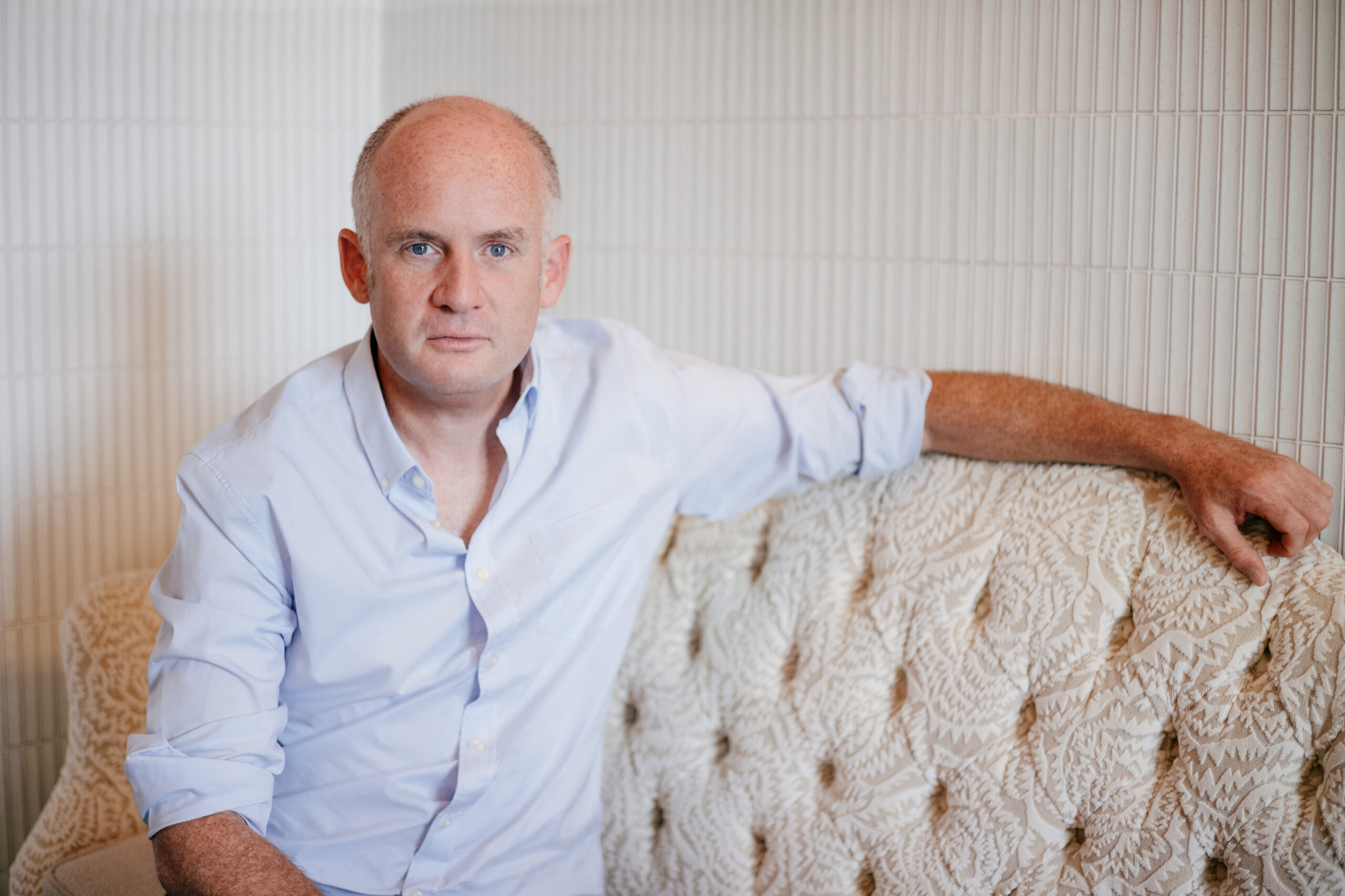
Oliver Burkeman is the New York Times bestselling author of "Four Thousand Weeks: Time Management for Mortals" and of the newly released "Meditations for Mortals: Four Weeks to Embrace Your Limitations and Make Time for What Counts"
557 [Mindful Working Series #1]: You'll Never Get it All Done, and That's Okay
Oliver Burkeman
In this episode of the Mindful Mama podcast, Hunter Clarke-Fields talks with Oliver Burkeman about the deep connection between self-worth and productivity. They explore:
How our culture teaches us to measure value by how much we get done
The “efficiency trap” and why it leaves us feeling never enough
The freedom that comes from embracing limitations
How accepting our finite nature can make life more meaningful
This conversation offers a gentle challenge to hustle culture — and an invitation to redefine success to create more peace, purpose, and joy in everyday life.
Ep 557- Burkeman
Read the Transcript 🡮
*This is an auto-generated transcript*
Hunter (00:04)
You're listening to the Mindful Mama Podcast, episode #557. And today we're talking about, you'll never get it all done and that's okay, with Oliver Burkeman.
Welcome to the Mindful Mama Podcast. Here it's about becoming a less irritable, more joyful parent. At Mindful Mama, we know that you cannot give what you do not have. And when you have calm and peace within, then you can give it to your children. I'm your host, Hunter Clarke-Fields. I help smart, thoughtful parents stay calm so they can have strong, connected relationships with their children. I've been practicing mindfulness for over 25 years. I'm the creator of the Mindful Parenting Course and Teacher Training. I'm the author of the international bestseller, "Raising Good Humans", "Raising Good Humans Every Day", and the "Raising Good Humans Guided Journal".
Do you ever feel like your value is measured by how much you can get done? Yes, I've been there and we're gonna talk about this idea of self-worth and productivity. And I'm going to be talking to Oliver Burkeman. He's the New York Times bestselling author of "Four Thousand Weeks: Time Management for Mortals" and the newly released "Meditations for Mortals: Four Weeks to Embrace Your Limitations and Make Time for What Counts". I think you're going to get a lot out of this. He's a really smart guy, so cool. And we're going to talk about the freedom that comes from embracing limitations. So I think no matter where you are, you're going to get something out of this. So join me at the table as I talk to Oliver Burkeman.
Oliver, thank you so much for coming on the Mindful Noma podcast.
Oliver Burkeman: It's a pleasure, thank you for inviting me.
Hunter: I'm excited to talk to you. I'm really, really enjoying "Meditations for Mortals"- by the way, which is one of Oliver Burkeman's great books. And it kind of confronts the fantasy of endless time. Like, we think we have all this time. Can you share with Drew you to explore this in "Four Thousand Weeks" and now a little bit more in "Meditations for Mortals"?
Oliver Burkeman (02:46)
Yeah, I mean, I think everything I'm doing in my writing is some kind of self therapy in public, really. So it was always, it was always grappling with the things that were an issue for me. I was going to say whether I realized it or not, but I think I have realized that most of my career to date, maybe at very beginning I didn't. And so for me, I spent a lot of time as a young adult, I guess, living with this fantasy that I was just around the corner from figuring out how to make work and life function properly together, how to do all the things that I both wanted to do and felt obliged to do, whether it was just I was going to find the perfect productivity system or I was going to summon previously unknown reserves of self-discipline or something, you know, was going to make that difference. And fortunately for me, one of the things I got to do in that time was to write newspaper columns for The Guardian in the UK, exploring some of these ideas.
And that's very useful because if you sort of test out a lot of these systems and techniques as part of one's job, you know, you get to the point where you realize, maybe if I've tried a hundred of these and none of them have brought about this paradise of total control, maybe there's something wrong with the question that I'm asking here, as it were, I guess. So that was sort of the beginning of my starting to think that maybe there was an alternative to desperately trying to get on top of everything. And that's what the books are about on some level.
Hunter: Yeah, here at the Mindful Mama Podcast, we have an audience of parents who are feeling endlessly overwhelmed and, you know, want to get all the things done. And I think there's this sense of, you know, who am I if I'm not getting all the things done, right? There's a sense of worthiness that is in question: maybe if you're leaving things unfinished or you aren't efficient or you can't get all your things done, is that something you were confronted
Oliver Burkeman (05:11)
Yeah, I think self-worth is right at the heart of this. I mean, first of all, we have to say and absolutely grant that everyone is, people are in radically different situations and some people really do have to do a lot more stuff just to stay afloat than other people. Absolutely. But there is this kind of near universal thing of whereby you sort of feel that just in order to kind of fully justify your existence on the planet, you have to do an amount of things that is essentially impossible for anybody to do. And that doesn't go away just because you might be a more affluent person than someone else or you might have more help than someone, whatever it is, right? It's like there's some sort of dynamic we can talk about if you want, that means that you always end up feeling that you're at the edge of your capacities, no matter what sort of changes you make to your life.
And I think that's a really deeply human thing. I think it's all to do with our discomfort at being limited. I think it's definitely made worse by the sort of culture and economy that we exist in now. And I think a lot of this is just made a lot more vivid through parenthood. I always feel like the, we've got a son who's eight. I always feel like becoming a father- it wasn't quite right to say that it is just a completely an experience, completely unlike anything else. It's more that it takes all sorts of things that are true for everybody, including non-parents, and just makes them so vividly unignorable. Starting, obviously, with the sudden disappearance of two thirds of your discretionary time at minimum. But all sorts of other things as well, all sorts of other questions about whether we find value in the moment or in the future and how we interact with other people and how our plans interact with reality. Like, they're all just made so vivid by that, by parenthood.
Hunter (07:23)
Yeah, I think so. think back to my, when the girls were little and I had a lot less time and how actually much more efficient I was with my time. I feel like I've given myself permission to have rest and ease because I know that's good for me and I know that's good for me as a parent, as a person and the way I show up and things. Now I'm more, I'm getting a little lazy though. I like my rest and ease too much. And I'm like feeling like maybe I should, I should feel a little more of the angst of getting things done that I used to feel.
Oliver Burkeman: It's funny, isn't it? It's like you lose in both directions and especially in a culture like the one we live in, there's this sort of vague sense that there's something else you should be doing. you know, this is a move I often make in my writing, but I think the answer is not to try to sort of reassure yourself and say, oh, no, no, no, don't worry about it, but say like, yeah, actually there are lots of other things that in some sense you should be doing, but as finite humans, we have to choose.
Oliver Burkeman:
And, know, I don't know your life. Maybe you could be in that category of people for whom it really is time to dial down the rest a little bit. I don't think that's true for many people and I doubt that it's true, right? think, know, the, overwhelmingly we, we persuade ourselves that, rest is the first thing to go. And we set our sort of basic standards for productivity so high that it just distorts all our, all our judgments about these things. But yeah, like anything one chooses to do or decides to do with an hour of life, there's another million things you're not doing. One of the things I feel quite strongly about is that feeling more into that truth rather than trying not to think about it is actually really liberating and grounding and all sorts of things. It doesn't need to be avoided with horror.
Hunter (09:24)
Yeah, like you're saying that we have to accept that there's never the right answer, right? And we're never going to get everything done. And you're talking about accepting our limitations a lot in meditations for mortals. Was this something that was hard for you to do and how did you come to that?
Oliver Burkeman:
Yeah, I mean, and I'm still a work in progress, right? But I think on some level it is the thing that we're all trying, that we're all grappling with. For some people it is sort of manifest and not very straightforwardly to do with quantities of things and of time. So that's the sort of productivity piece of this. People feel like they ought to be finding a way to do many more things with a given hour or a given day. And then for other people it's more about a feeling of control, the sense that they need to either make sure things go the way they want them to go, or for people pleasers, it's to make sure everyone's feeling the way you want them to be feeling. There's so many different manifestations of this, but I think they are all… It's quite useful to see them all as different kinds of confrontation with the sort of limitations that we experience as humans. And yeah, no, totally. This has been my, in one way or another, you know, feeling like I ought to be doing more, feeling like there's all sorts of ambitions that I have that are incommensurate with each other, feeling that I ought to be spending 100% of my time, my waking time with my son, but I also want to spend and need to be spending lots at work and enjoy spending it at work.
How do you make these numbers add up? And I think ultimately it's really important to see that you don't. But the starting point here is that, you know, everything is trade-offs. Everything is sacrifices. Doesn't mean you can't make better or worse decisions, but it does sort of free you from that idea that there's a right answer that like you just haven't been able to figure out yet because you're a loser, right? It's like, no, there is no right answer here. And you know, I think that's a really powerful place to begin, because then it means that all your job can ever be is to sort of feel your way intuitively navigating among these different potential meaningful uses of your time.
Hunter (12:02)
Stay tuned for more Mindful Mama podcasts right after this break.
You say that time management is not really about efficiency, but meaning. I guess I can, the way I can really wrap my head around that is that, you know, there's nothing that, you know, I'm not going down to the creek to get water. I am not carting the wool to make my clothing anymore. Like there's all of the things for my existence in some ways are optional, right? Like it's not like I have to get the water, have to harvest the food, right? All of these essential things for life are things that I can do later or I can order in or I can, but you know what I mean? There's a lot of different options for, for a lot of us these days. And the work we do for a lot of us is on a screen. It's not, I'm not, I'm not like a, you know, building the wall to keep my sheep in. so I think there is this sense of like we have to kind of put the meaning in what we're doing. We have to kind of seize it and kind of put it there because it's not inherently like essential, all the things we do in some ways.
Oliver Burkeman:
Yeah, that's a really interesting way of thinking about it. agree, think. I think, you know, the way I might come at that, the same point. It's a different angle, I suppose, is just to say some of the dilemmas that we feel about, or the ways we beat ourselves up about not doing things are, you know, on some level, horrible phrase, but anyway- first world problems, right? They are things where if all you are trying to do is like stay alive and not catch the plague and, you know, make sure your little hut is protected when the next, marauding army comes into town. And like on some level that is obviously life for people today as well in some places, but, if that's not your life, that's the moment at which you start to really face these, these dilemmas. Because you start to have this kind of level of freedom. Like I could do this and I could do that. And then maybe feeling like, like when if you're protecting your hut from the marauding armies, when it's time to rest, you just rest. You have no problem with it, right?
Hunter:
Right, absolutely, yes exactly.
Oliver Burkeman:
You collapse in exhaustion and you sleep and you don't say to yourself, well first of all I've got to make sure everything's really tidy because I can't let myself relax until that's happened. And you know, it's an interesting parallel. I don't know if you agree with this, but I think that there is a parallel between that sort of absolute necessity driven experience of people living in, some extent, less luxury or less modern convenience than we do. There's some parallel between that and the experience of having a newborn baby. know, obviously this experience is significantly more acutely true for mothers than for fathers. But even as a father, like, suddenly it's just necessity for like a good chunk of weeks or months. Suddenly it's just like, nobody cares about my schedule for how the day was going to unfold, right? Things need to be done. Things need to be responded to. The baby awakes when the baby awakes. The baby needs feeding when it needs feeding. And, you know, obviously one approach to parenting is focused on getting the baby swiftly onto a clock-based schedule as soon as possible. But for at least a short period there, you're in that kind of, you know, we've got to keep this little thing alive and and and you're just responding to the essential circumstances.
And again, I don't want to sort of soft soak this too much, but I think that in my memory and I've talked to other people about this, like there is something about that, even when it's kind of hair raising and anxiety inducing that is something like relaxing, even while it yes, hugely exhausting, right? But something is not present, a certain kind of mental suffering is not present in that time because you're just like, okay, that's what I'm doing. And yeah, and if the other time that has come up in my life is when a close friend or somebody is going through some kind of crisis, right? And maybe it's your job to be a shoulder for them to cry on or maybe it's your job to just like, I don't know, go to the grocery shopping while someone else is their shoulder to cry on. like, yeah, there's no question about what you should be doing. And there is something liberating about not having those questions, even when the thing that's happening is kind of not fun.
Hunter:
It's interesting bringing that up in that context makes me think about how for a lot of moms, the feeling of just, you know, I talk a lot about like making yourself and your mental health and wellbeing a priority so that you can show up, you know, the whole, oxygen mask. And people have resistance to this and people have resistance to this in a lot of different ways. Culturally we're taught-especially mothers are taught- about to self-sacrifice and that's sort of the highest good. But I wonder if part of it is there's such clarity that you have like in that newborn phase when everything is about just this child and then it's slowly we have to slip into balance of life where I'm getting my needs met and you're getting your needs met and we're balancing this all out. But it's the messy middle. The middle path is so messy and there isn't that clarity of the extreme. And maybe I wonder if some people in some ways yearn for that clarity.
Hunter:
Yeah, that sounds like a great point to me. It feels like I shouldn't claim I know what it is, fully know what it's like to be the mother of a newborn, right? But, but I think that, yeah, there's almost, you know, there's, there's a still happening separation between the two beings on some, on some level and that sort of fourth trimester period. And the problem is that you're not taking time for yourself away from that. problem is societies that create a pressure for people to go back to work immediately or something like that. There is something simple and good and absorbing about just having no choice in things sometimes. Then the addition of some modicum of autonomy.
Which of course is important for the kid as well, It doesn't, that there should be some distinction between my interests and your interests. This is a good thing, but it's a harder struggle. We're taught how to push forward all the time, of outside of these times of extremes. We're taught to just push forward all the time. We're taught to get things done. kind of think that it goes, maybe it goes back to industrialization. We're taught to just go and go and do, but we're not actually taught how to stop. And so of course we have this resistance to stopping. We have this resistance to ease. How do we get to be able to stop? How do we get to that place in our hearts and our minds where it feels meaningful to stop and pause without having everything on the to-do list done?
Oliver Burkeman:
That's a great question. And I think if there was a really neat answer to it, I would have written it and it would have been very popular and lucrative. think a couple of things spring to mind. mean, first of all, this is definitely an ongoing practice. It's not a one-shot deal at all. But one aspect of this is the, I would say is the perspective shift that I'm tracking through my books, which is that when you become a little bit more convinced that it is impossible to get everything done in the sense that you're expecting, that's actually very liberating when it comes to giving yourself permission to rest because it becomes clearer and clearer that if you wait for everything to be done, you will be waiting forever and a day. That is never happening. And so you sort of shift from thinking that you've got a bucket of things that you've got to empty before you do it- to thinking, like, all you're doing is you're just in this ocean of infinite possibilities and demands and obligations and tasks. And you've done, you sort of to learn to swim in it, right? You do some and then you stop for a while. And I think it can really help to see that rest has to be in the midst of a long to do list if rest is going to happen at all.
And then, you know, this is the idea obviously in the Judeo-Christian traditions of Sabbath and other religions too, no doubt, that the reason that you stop on a Friday night or a Saturday night is not because you've done everything, but just because it's Friday night or Saturday night and that's when you stop for a day. And that is such a sort of important and interesting thought to me- that religions for centuries have realised that if you say you're going to rest when everything is done, you're never going to rest. There's a great book called "The Sabbath World" by Judith Shulevitz, where she talks about the famously incredibly detailed restrictions of the Orthodox Jewish Sabbath as being not to be oppressive and tyrannical over the person who's resting for that day, but just because it's so tempting to work and to do things. We're so basically set up to exert ourselves that you need to take away every single possible outlet with a rule that says, no, no, you can't do that either. You can't do that either because it's not, it doesn't come naturally to us. And at least it's sort of comforting to realise that it maybe it hasn't come naturally to us for millennia rather than that it's just a 20th, 21st century phenomenon. Everything's, know, stores are open on Thanksgiving. can, you know, there's no like, liquor stores are open on Sunday. I remember when they weren't open on Sunday. I used to be really annoyed at that, but now I can see the value and some limitations, you know, for me, you know, obviously the phone, the internet and the digital connectivity of everything being available, everything all the time is so-
Hunter: -it's causing so much anxiety and problems and distraction and fragmentation. I had to put limits on those things. I actually- I've told this to my daughter- I'd been talking about wanting to get a dumb phone this year. I had just been finding myself, know, filling moments with the phone and it was a feeling fragmented and realizing, I need these limits and she took off the New York Times and Instagram and Facebook and I ordered the Philadelphia paper to be delivered physically to my house. And then the Philadelphia paper wanted to give me all this email newsletter. was like, the reason I'm doing this is so I don't, I'm not on this thing. want this physical paper. The bunnies by the way are really bad these days. I'm just saying. But anyway, it's like there are no barriers for us anymore. It's hard.
Oliver Burkeman (26:53)
Yeah, and think part of that is it's much easier when it's communal, right? And there are lots of advantages to the fact that we live in an era now where there are lots of different traditions that can live side by side. But one of the things about living in a community where nobody works on a Sunday or nobody works on a Saturday is that there's no temptation to go shopping when the shops are shut, right? But they do all have to be shut on the same day for that system to work. And you can't completely replicate that yourself, right? You can say as a family, we take this day a week to not be on screens or something, and that's not useless. But all your friends or your children's friends are still conversing on those mediums when you're away from it instead of it all sort of falling away for a day.
I think one other thing you asked about how- I just want to share one other thing that makes a difference to me is there's great power I've found in not expecting rest to feel really good just at first, right? I mean, if you sit down with a novel because you know that actually that is what you need and you'll be doing right by your family to take that time. Or on a larger scale, you go away for a week's vacation and it's the first time you've done it in ages.
There's no need to make things worse by expecting that the moment you begin, you're just going to sort of enter into a state of bliss and ecstasy. You're going to be, you're going to feel that gear crunchy feeling of like, I'm not, I don't want to be doing this. I want to be carrying on and getting things done. And the title of your podcast- if you can sort of be mindful of that feeling without letting it ping you straight back into activity, at least sometimes it fades rather quickly and then you do get into the stage of appreciating the rest. So I think it's always helpful not to have sort of perfectionistic standards for how great this is going to feel the moment you implement it.
Hunter:
Yeah, I often say we're going to be present. We're going to slow down. We're going to pause when we, you know, when we get on vacation with our kids and I'm going to be really present with my kids and going to listen, we're to have bonding moments, blah, blah. But then you get there and you're there and your brain's going a million miles a minute because that's what you've trained it to do every day is to just go do get things done. And so you can't rest almost has to be a practice, like being present, resting, relaxing your body to be able to have the ability to do it. You need to practice that ability. You have the muscle.
Oliver Burkeman:
Absolutely, yeah, no, totally. And it's kind of a paradox because on the one hand, totally, you need to like consciously and deliberately do something that might not feel good at first, even though the thing is supposed to be like it's rest. If this isn't good, doesn't feel good, what does? And then on the other hand, those moments of connection and the moments when you really feel like you sort of fall and more fully into life, they do arise from the practice, but they don't necessarily arise when you do the practice or in the way that you're expecting. there's a very interesting balance between the kind of self-control that you need to sort of consciously rest and the kind of control that you need to surrender in order to let those accidental moments happen when they happen.
Hunter (30:45)
We're- again- in that messy middle. To go back to like our time, you talk about the efficiency trap. And I just would like to underscore this, that the more we try to optimize, the busier we get. And then maybe we could talk a little bit about what a healthier alternative to that.
Oliver Burkeman:
Yes. I mean, this is just the term, the efficiency trap is just kind of my phrase for this pattern that you see not only in people's personal lives, but it occurs in various fields of economics and all sorts of places where if all you do to a system and the human life and the family, they are systems as well, right? If all you do to a system is to make it more efficient so that it can deal with more stuff in the same amount of time, then all else being equal, it will just attract more and more stuff into the system to use up the additional bandwidth. So to give a concrete example, you if you get faster and faster at dealing with your emails because you really want to finally get on top of your emails, then for various reasons, in the case of email, it's because people reply to you and then you have to reply to their replies and you get a reputation for being responsive on email and all the rest of it, for various different reasons, more emails will come your way. And so the sort of extra space that you'd freed up in your life by getting better at dealing with email will be filled up by more email unless you take some other kind of action to reduce the amount of time you spend doing email.
Hunter:
This is so great because my husband has Inbox Zero and I have an email inbox with, like, 30,000. So I'm going to just share this with him.
Oliver Burkeman:
Yeah, right. can pull rank. Exactly. One more, to, sometimes it's an example that makes it vivid for people, but like there's this famous phenomenon called induced demand where they, city planners try to reduce congestion by adding a lane to a busy freeway. And then what happens is this becomes a more attractive route for more motorists. so more traffic uses the widened freeway and in some cases anyway the congestion is just as bad as it always was. So when there's a sort of infinite supply as there effectively is not literally of you know potential commuters to use a freeway or potential demands that could land on your plate or potential ambitions you could have for your work life or anything when it when the supply is effectively infinite getting faster getting through it is not going to get you closer to the end right because that's not how infinite supplies work. It just means you'll be busier and more scattered and distributing your limited attention over more and more and more things. So doesn't mean you shouldn't try to be more efficient in your life, right? I mean, if it's taking you 25 minutes to locate basic ingredients to cook dinner with, then you should reorganize your kitchen, sure. But the crucial point is the peace of mind that we crave doesn't lie at the other end of relentlessly optimizing yourself. can't sort of optimize yourself to peace and calm. You have to claim peace and calm in the midst of the overwhelm, I think.
Hunter (34:22)
Stay tuned for more Mindful Mama podcasts right after this break.
I love this in "Meditations for Mortals". We have a very productivity, obsessed culture. And I would like to encourage us all to protect what really matters, connection, rest, presence. And I also want us to protect our community and our friendships and things like that. you have a chapter where you talk about scruffy hospitality. And I was wondering if you could tell us about that.
Oliver Burkeman (36:47)
Yeah, happily. When this topic has come up, I'm always at pains to clarify, as I do in the book, that I did not invent this term. This comes from an Anglican priest in Tennessee called Jack King. I sort of half feel like I did invent this approach to dinner parties before I encountered his phrasing, but the phrasing is all his. He tells a story about how he and his wife really enjoyed entertaining people for dinner at their home, but that they sort of had gradually developed this sort of unspoken checklist of all the things that had to happen before the home was ready. You know, you have to choose a wonderful meal and buy the right ingredients. You have to clean the house, tidy the playroom, mow the lawn, to the point where they were resisting inviting people around and denying themselves and their friends the fundamental pleasure of a dinner together, which is the conversation and the connection, because they were invested in sort of controlling the performance, the facade of it. It's very natural thing, but they decided to deal with this by embracing what he calls scruffy hospitality and inviting people around to eat whatever was in the cupboards at the time and to be surrounded by whatever untidy playroom there was, the insufficiently mown grass. And he writes about how this was an extraordinary revelation about like what truly matters in social connection. And the interesting part for me, and this has been my experience too, is it's not just like, the message here is not just like, it's all right. Like you have permission to be a bit less good at creating a perfect home, it's actually that there's something better in a certain way about the quality of connection that comes from being willing to invite people into your world as it really is. I think there's a gendered thing here that needs to be acknowledged. think probably the social pressures are significantly greater on women than men to present really, really beautifully tidy homes.
But the point is that like it's actually kind of a privilege to be invited into somebody's home as it really is. Like maybe there are limits here in terms of doing a little bit of clearing up, but the idea that I can only come to a friend's house when they've really put up a facade of a perfect life is actually kind of alienating, right? It's like I'm maybe not one of the close friends. And so there's something really powerful in that notion. And it isn't really just about dinner parties, right? This is obviouslan ethos of how we present ourselves to each other and how much effort we put into kind of trying to build facades to impress that ultimately end up creating distance.
Hunter:
Yeah. Will I go for a walk with you without putting mascara on? That's a good question. That's a real measure of how close we are in our friendship.
Oliver Burkeman:
Fascinating, yeah, that's a great index of exactly the same phenomenon, yeah.
Hunter:
Do you have any personal practices or habits that help you return to what matters when you feel pulled by urgency or distraction or just that kind of inner restlessness?
Oliver Burkeman (40:22)
I mean, it's a bit of a cliche, but the one sort of keystone habit that I always come back to is morning pages, right? It's like free writing on three sides of a sort of a half letter size, you know, A5 notebook each morning. I don't always get to do it. It definitely was an interesting thing to try to integrate into becoming a parent. but that is a really sort of central thing for me. And you, can tell that it is because it doesn't actually take that much self-discipline. It's not something that I make myself do because it's good for me. It's something that I just like crave and I just so know that the day goes better when I get that than when it, than when I don't. And so I think that's a time when I'm often sort of externalizing problems out onto the page or just sort of thinking my way around things, talking to myself about how I feel. It's you know, unreadable rubbish to anybody else, but it's not for anybody else. So that is important.
Hunter:
You have an eight year old, when do you do that? I mean, so do you do it before he wakes up or after he goes to school? what's your, sometimes it's helpful I think for people to know the nitty gritty of how does that ritual fit in.
Oliver Burkeman:
Yeah, well, I had to make changes because it's a challenge. mean, my circadian rhythms are definitely, I'm a lark rather than an owl. So getting up before anyone else in the house is not too hard for me. have to say right now as we record this, it's getting a little harder because my son seems to be waking up. as early as I do, is, which I need to, I need to stop this happening somehow, but he's also getting a little bit older. So, you know, to a certain extent he can be induced to read while I finish something. One of the things that I did quite early on after he was born was, I, I sort of replaced any sense of a morning routine, which to my mind says at 6.30 AM, I do this at 6.45 AM, I do this with what I thought of as a sort of a running order. the thought was there are four things I want to do each morning before I start work. So there might be a little bit of reading of some kind of reflective contemplative text. It will be morning pages, might be having a short opportunity to plan the day, maybe do some stretching, whatever. Put in your own things in there, right? But the point was not that I was going to do these at specific times because that was just off the agenda. I would either be sort of actively parenting or sleeping because I'd been up in the night or whatever it was. The idea of a running order for me was just like, I'm going to do these things in this order with the discretionary time that I get when it arises. And so, and I still do this to some extent, right? So like if I get up really early, I begin that running order. Okay. If I'm interrupted 20 minutes in.
Maybe I don't return to it for another two hours, but then I pick up that order where I left off. It still requires a certain amount of autonomy over my time, right? Because if you just have to be at your desk at your job at 8 a.m. every day, then that's a hard, hard stop. But if you've got a bit of freedom around your time, it can be quite useful to do this because what I think what it ends up meaning is if you don't- when I tried to do it any other way, I would constantly run into this problem that like my life as a parent was colliding with my plans for the day, which is just absurd when you stop to think about it, right? I mean, obviously life has to be the thing that determines how things go. So it was the right level of control. was like, when I get that pocket of time, I know already what I'm going to be doing with it. As opposed to, absolutely have to get this pocket of time at seven in the morning, which is just a recipe for frustration.
Hunter:
Yeah, and one of the themes that you keep going back to again and again is that we have less control than we think we have, that we have to embrace our limitations. There's a wonderful Zen saying that I really love, that I share often, that I think is so helpful with this. And it applies to lack of control, but it also applies to kind of what we think we know. And as the idea, as you breathe in, you say to yourself, clear mind, clear mind, clear mind. And as you breathe out, say to yourself, don't know. But I think that's so helpful because like we don't know. in fact, we went to, when we went to the, we go to the Blue Cliff Monastery once a year, which is in the tradition of Thich Nhat Hanh and Plum Village. And we bought a piece of calligraphy that we have hanging in our stairwell that says, "Are you sure?" Which is also so helpful- it's like, okay, absolutely. If there's one takeaway you hope the listener could walk away with, especially parents, what would that be?
Oliver Burkeman:
I think that to come back to that sort self-worth piece that we were discussing at the beginning, I think it's just so easy for all of us really to fall into this idea that there's more that we have to do before we get to feel like we have sort of earned our spot on the planet. And there's a chapter in the book where I talk about this idea of the reverse golden rule which is just the idea of not treating yourself worse than you would treat other people. I had a lot of difficulty in years past with the way that self-compassion and self-love get written about, including within sort of meditation traditions, but not only, because it seemed to me to be asking me to consider myself some sort of incredibly unique and special snowflake, which I found sort of aversive somehow. Maybe it's just being British, I don't know. But this idea of the reverse golden rule that I got from a philosopher called Ido Landau is just inviting you to notice how often we talk to ourselves in ways that we would never talk to friends or even just anybody, strangers. And so the invitation is not to treat yourself as an incredibly uniquely superior special individual, but just to say like, how about you take a democratic approach and, and, and, and, and, and don't beat yourself up more than you would lay into a friend for being a bit overwhelmed or running slightly behind with things or not having a completely tidy playroom or any of the rest of it. And that appeals to me. It's the same point, but it appeals to my sensibility more. All I'm being asked to do is, is not treat myself worse than the other people.
Hunter:
I think that's a perfect thing to leave on. I'm really, really loving and enjoying "Meditations for Mortals", Oliver Burkeman's latest book, and there's "Four Thousand Hours". You can find those everywhere books are sold. Thank you so much for being so reflective and writing. So it's really funny writing to do listeners, just very easy read. And thank you for doing what you do. And thank you so much for coming on the Mindful Mama podcast. I really appreciate your time.
Oliver Burkeman (48:42)
Thank you, I really enjoyed it. Thanks for inviting me.
Hunter (48:50)
Hey, I hope you appreciated this episode. I loved talking to Oliver. This was so cool and a treat for me to talk to him. And I want us to just- hustle culture. Let's encourage each other to not hustle quite so much define our success by our peace, our purpose, our joy. And it doesn't have to be about all the different things we'd necessarily get done. Although I love crossing a thing off the list.
Thanks for listening. If you enjoyed it, leave me a review. Let me know. I'm @MindfulMamaMentor on Instagram and Facebook. Let me know there what you thought and I would appreciate that.
Beautiful week. Thank you so much for listening. Namaste.
Support the Podcast
- Leave a review on Apple Podcasts: your kind feedback tells Apple Podcasts that this is a show worth sharing.
- Share an episode on social media: be sure to tag me so I can share it (@mindfulmamamentor).
- Join the Membership: Support the show while learning mindful parenting and enjoying live monthly group coaching and ongoing community discussion and support.